
In a battle over family or love what would end up winning for you?
Most people envision falling in love with people that their family would approve of. But when the chips don’t fall that way (since life always has other plans, after all) – what do you do? Do you risk it all for love or sacrifice that love for your family?
This theme is explored in two things I watched recently; A Suitable Boy and the film, Love + Hate.
A Suitable Boy – the gist:
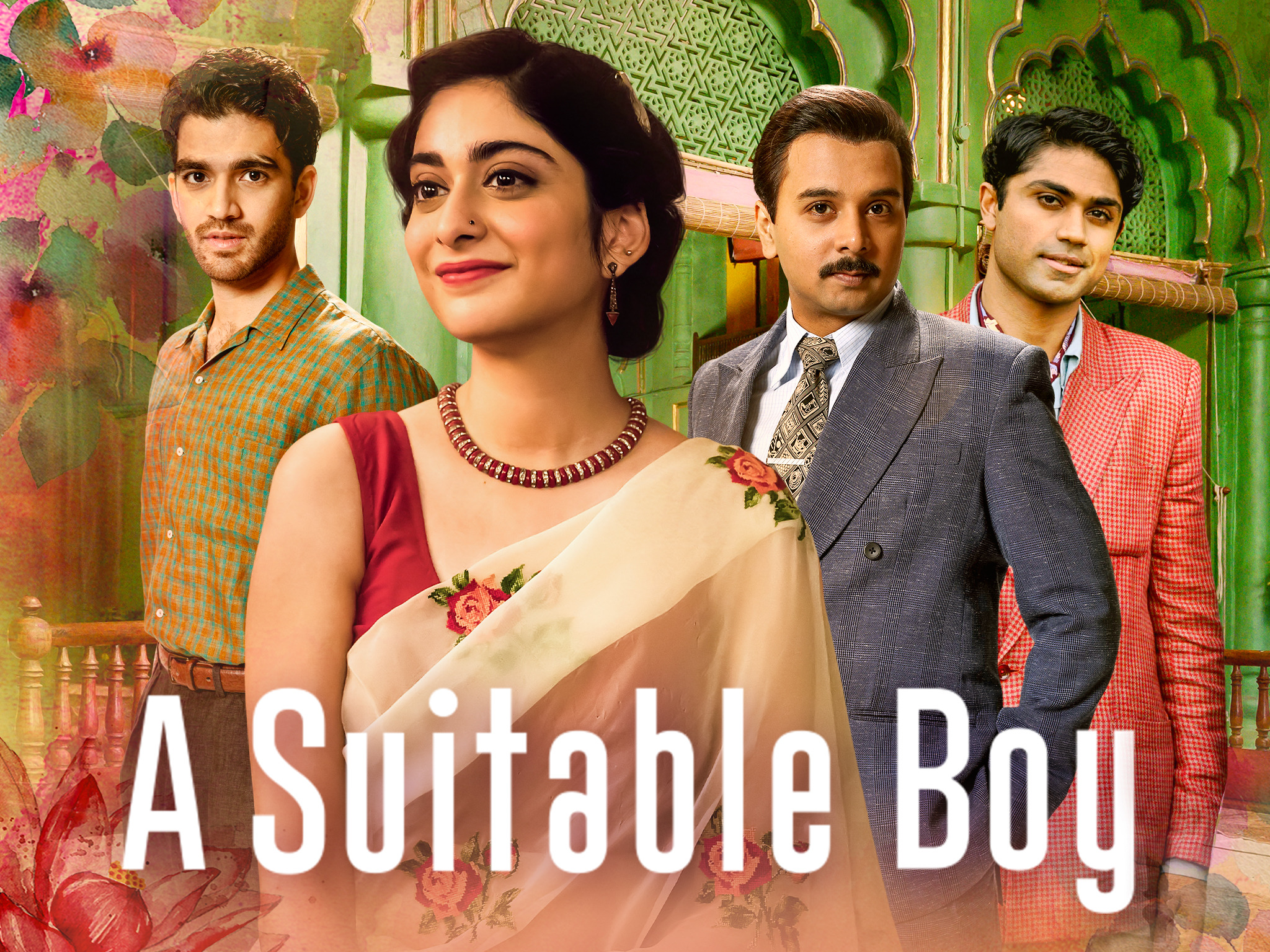
A Suitable Boy (2020), is a historical BBC drama series based on the popular book by Vikram Seth. It follows young female student, Lata who falls in love with dashing fellow student, Kabir. It’s set amidst the backdrop of 1960s India, so many political events are taking place in the background which fuel lots of the events in the drama. With one of the key events being India’s first general elections, which are slowly approaching.
It starts of with a typical boy meets girl scenario at an Indian university. Lata plays hard to get but Kabir is entranced and determined to win her over. He succeeds soon enough. However, there’s an issue – Lata is Hindu and Kabir is Muslim. The two religions do not get along, yet alone marry, so she knows there’s no way she’ll get her mother’s blessing for the relationship. She battles with this throughout the series, especially as her feelings for Kabir grow. Her friend initially against it does eventually tell her to go for it, but her mother is determined to stop the relationship in its tracks by arranging a marriage for her. To make things juicy, as episodes go on, she attracts – along with Kabir – not one but two additional suitors vying for her heart! Bridget Jones could never. The other two suitors are strong candidates; Amit Chatterji – wealthy and eligible bachelor who is also a published poet, and Haresh Khanna, a British educated shoe maker determined to settle down.
Thoughts
I loved all the characters in this drama – not because they were likable but because they were well fleshed out. It didn’t shy away from exploring themes of religious conflict and violence; something that was ultimately crucial to authentically cover this period of time.
I’m not sure how the book ends but in terms of the suitor Lata chooses in the end, I was quite surprised by her choice. Firstly, you do get the slight sense that Lata would prefer not to be married. She’s a teen who is in love with learning and realistically, probably would have thrown herself into more studies if it wasn’t for the social expectation that she can’t do so – she has to choose marriage instead. There’s also many points in the series where it seems her mum is very much keen to marry her off more than Lata herself wants to get married. Her mum being a widow is an important factor in all of this – it feels, perhaps that she can live vicariously through the new relationships of her children. The engagements and weddings provide her with joy after long grieving her husband and, perhaps, feeling lonely herself.
I had some issues with the series’ ending. The suitor ultimately chosen didn’t seem on brand for the Lata I had grown to know and become fond of throughout the show. It also felt like, she didn’t exactly tie up the loose ends with her other suitors either – she just chose one to be with and went on her merry way. Bit of underwhelming breakup/goodbye considering that she spent 75% of the series talking about them, being with them or thinking about them. But I digress.
Love + Hate: a gist
Next up we have the film, Love + Hate (2005). This is set in Britain and centres on the love story of two teens, Naseema and Adam. They start of working together in a DIY shop with a fairly quick attraction forming. Yet, because this is a film, this attraction can’t be straight forward. In fact, Adam is not a fan of Asians (also known as being a racist), so although attracted to Naseema, he refuses to interact with her. This means he often ignores her questions and even has the audacity to demand that Naseema is fired by the store manager. She’s oblivious to the hostility though, often trying to make conversation and giving him flirty glances here and there.
Like A Suitable Boy, the backdrop is one of great social division – this time along racial lines; with a large anti-Asian and Islamophobic movement active in the area. Adam’s family is bigoted, blaming Asian immigrants for various problems in the area. His mum rants for instance about how her tanning bed business is being threatened by new Asian owned businesses that have opened up the road. He and his brother are very vocal about not wanting to ‘mix’ with the Asian demographic of their city. There’s a scene when they’re at the pub with friends and all jokingly talk about how they would never date an Asian girl. Then one lad in the group disagrees saying actually he would date one – he finds them to be very attractive. He’s met with violence, shouting and is forcefully kicked out the pub and the friendship group. Such is the high penalty for breaking the mold and being a decent human being.
Overall, this was an interesting film but by no means compares to A Suitable Boy. The build up and dating period between Naseema and Adam could have been fleshed out a bit, I think. I wish we saw more banter and conversation between them as they got to know each other. But because it was a ‘forbidden love’ they often had to meet in dodgy locations and for short amounts of time to avoid being caught by people from their respective communities. This didn’t give much opportunity for their chemistry to grow or shine for those of us watching. I’m also not a fan of this implied idea of people being able to ‘love away their racism’ since I don’t believe that’s possible, so it seems ever so slightly irresponsible to encourage that, even if it’s promoted subtly. Adam, who has grown up a bigot and raised with racism embedded values, suddenly falls in love and is suddenly no longer racist? Something tells me that’s not how that works…
Anyway, my overall ratings for both? A Suitable Boy – 8.5/10; strong series and cast just let down slightly by its ending and lack of tying of loose ends. Love + Hate – 7/10 – very gritty and rooted in an idealistic optimism I find it hard to get on board with.



 TheArtofChatter