The many faces of a predator – A review of docuseries, ‘Betrayal: The Perfect Husband’

TW: This series and my review about it concern grooming and sexual assault

About

This three-episode docuseries, available on Disney+ explores a case featured in the (apparently) well-known podcast – Betrayal (season 1).

In 2019, teacher Spencer Herron was arrested for sexual assault of a pupil and eventually pleaded guilty. This shocked everyone around him who saw him as a happy husband and passionate teacher, who taught at the local high school (whilst occasionally doing music work with the army.)

The series mainly follows Jenifer Faison, a reality TV producer (if I recall correctly) Spencer’s ex-wife, and the Betrayal podcast host who unpack the series of events and discoveries that follow Spencer’s arrest.

My thoughts

Although I am a massive podcast fan, particularly of stories told in an investigative manner (think Serial, Dirty John and Hoaxed), having visuals to aid the storytelling for this particular story was useful and refreshing. As someone who is a fan of efficiency too, I suspect the series tells the story slightly faster than the podcast does so I feel like I’ve won back more of my time overall! Although I’m sure referring to the podcast is a good idea if you want further details possibly not covered in the series.

Sexual predators have a knack for being able to wear different masks accordingly. They do so with strategy and at all times. Why? Because without such deceit, their offenses would not be possible. Grooming and any assault that follows thrives on secrecy. Jennifer describes how Spencer was nothing but loving towards her, she recalls fond memories of him being attentive and doting as a boyfriend, and later as her husband. It’s why what happened next (i.e. him being arrested) was a rather abrupt series of events for her – she never saw it coming from a million miles away. And with one arrest her life started to collapse around her as more secrets were revealed.

Wearing masks, or rather crafting public perception carefully means that predators are always under the radar. Spencer is described as a popular teacher, the one the kids found ‘cool’. He even won a Teacher of the Year award in their district, for goodness sake. This is important to note because it means when allegations of such come out people usually react first with incredulity – ‘Spencer doing that? Surely not’. He’s such ‘a good man’. Of course, this isn’t true, he’s worked hard to ensure you only see a manufactured positive side to him that would ensure he avoided suspicion. It also paints a picture of what a survivor is up against if they want to speak out – who would believe that Mr Good guy teacher would do such a thing? The next assumption is that the accuser must have an agenda up their sleeves. Belief in their claims and solidarity with the survivor never occurs as an option to some. The uphill mountain can be steep enough for survivors to be scared silent altogether. However, there’s so much power in speaking out and I appreciate they were able to dedicate an episode to the survivor, Rachel’s story.

I think this series, although on a topic that is sadly not new, is done well and handled very sensitively. It explores the raw emotions and talks with various people affected by the chain of events – from Jennifer herself who had to deal with the unprecedented events of the person she was married to being an abuser and serial adulterer, to Jennifer’s parents and the various pupils taught by Spencer Heron. There was a saddening moment when Jennifer’s mum in the middle of talking said that this was the first time, she’d properly acknowledged that she had so much anger about this situation. It was a striking moment for her and one that stuck with me – I nearly welled up at that moment actually.

Properly respecting the story and experiences of those affected by a crime is always a sign of a good documentary or podcast for me. We often spend too long trying to psychoanalyse and ‘understand’ criminals themselves and whilst I can understand the appeal it means we often lose the voices of survivors in the process. A balance must be struck and this series aside, many media outlets have a lot of work to do in that regard.

It’s confirmed what I’ve always thought – that unfortunately, many sex offenders do not get as harsh a sentence as they deserve for the damage, they’ve inflicted on the community they reside and offend within. Whilst no bodies have to be buried, the scars they leave are deep and painful, often never leaving those affected – especially direct victims.

Recommend?

Anyway, I would recommend the watch – it’s very informative, the series is peppered with psychological insight from professionals which helps dive deeper into the story it’s covering but be warned it’s not an easy one.

_____

For reviews of a similar topic, click here (Netflix series, the Trials of Gabriel Fernandez) or here (review of book, My Dark Red Vanessa).

Photo by Mick Haupt on Unsplash

The higher we climb, the harder we fall…

Trigger warning: I touch on the topics of mental illness, addiction and eating disorders in this piece.

Watching Demi Lovato’s docu-series on Youtube ‘Dancing with the Devil’, which chronicles their journey with addiction and their road to recovery, got me thinking this weekend about just how fragile we as humans are. We are flawed, often egotistical yet constantly learning as we navigate each stage of life. Why is it then that we love to put fellow humans on pedestals, elevating them to a standard even they themselves often feel they cannot reach?

This is one of the things Demi touches on during the documentary, as over the years they have become somewhat of a role model for many when it comes to mental health advocacy. However, what no-one knew was that they were battling with addiction on the side lines; making the public perception of them and what the real Demi was like as different as night and day.

I honestly could not imagine the amount of pressure such expectations can place on a person. You have 5,10,15-year-olds saying your art has changed their lives or got them through a hard time and that one day they want to be like you. It would be impossible to shrug that off without feeling some sort of burdensome weight of a duty to live up to this fantasy they have moulded of you.

Humans were not designed to be worshipped (for several obvious reasons.) A key one being we don’t have it all together, we don’t possess the perfection that is exclusively associated with God. Being idolised can definitely build ego but it can also create a quick path to inner destruction. Celebrity worship is often reductive – individuals are often being lauded all the time for a carefully crafted perception of themselves they and their teams have worked hard to portray. Or more simply, it could be because of looks alone or a talent like basketball or singing that makes people all googly eyed. Unfortunately, such talents are fleeting – they can take years to build and be gone in a matter of minutes.

So, in other words, we’re never really worshipping celebrities for who they are because we’ll never be privy to the real them, we’re in love with who we think they are. The unrealistic expectations of others become internalised which can then manifest themselves in toxic ways – for Demi, for example this was through disordered eating. This coupled with the toxic nature of cancel culture means there’s also a pressure to never step over the line. Making mistakes (whether publicly or not) is part of growing up but nowadays, one wrong step and your career is in jeopardy.

Demi isn’t the only one who has recently grappled with mental health in the public eye. Naomi Osaka recently withdrew from the French Open after being forced by event organisers to since they wouldn’t allow her to pass on media interviews for the sake of her mental health. Jesy Nelson, former member of the British girl band Little Mix recently left the band, stating reasons related to the protection of mental health. Similarly, in the past many other celebrities have been open about their struggles with mental illness – Billie Eilish, Kanye West and even Mariah Carey, to name a few.

Of course, fame hasn’t been the direct cause of mental health struggles for many celebrities but it can certainly exacerbate them, especially if they previously existed before fame. For Naomi and Jesy it seemed as if they had reached the point where mental wellbeing and peace could not exist alongside the environment they were working in, so an ultimatum was reached. The fact many people, famous or not, have to choose between their work or mental wellbeing is very unfortunate. It shows – despite all the lovely ‘discussions’ we are having around mental health – we still have a long way to go in properly providing the related support people need for recovery, treatment or prevention.

_______________________________

Thanks for reading! If you’re interested in reading more on celebrity culture I wrote about some thoughts after watching the Framing Britney Spears documentary which you can read here.

Behind #FreeBritney

I was watching the Framing Britney Spears documentary on a weekend two weeks ago and it got me thinking a lot, so I thought I would share some thoughts. In particular, it made me think of how sad a word we live in where people would start to capitalise of a person’s low points in life. For those unaware of the much talked about The New York Times documentary, its release comes at a time when the #FreeBritney movement is in full swing. Although I am aware of the rough purpose of the movement, I wanted to watch the documentary myself to learn about the wider context of how Britney Spears’ conservatorship came to be.

Conservatorships, from my understanding seem to be legally binding arrangements made when a person is deemed unfit to make decisions concerning their own welfare. The parties these arrangements concern are often mentally ill or elderly. Conservatorships cover different areas of a person’s wellbeing, in Britney’s case the documentary explains that her’s means she is no longer in control of her finances or medical care – theses are controlled by other people, which up until recently has mainly been her dad. This is where things get iffy and become quite speculative – we don’t completely know how Britney feels about the arrangement or what her dad’s intentions have been all of these years. However, the documentary does give some indication to these questions so it’s definitely worth a watch.

You want a piece of me?

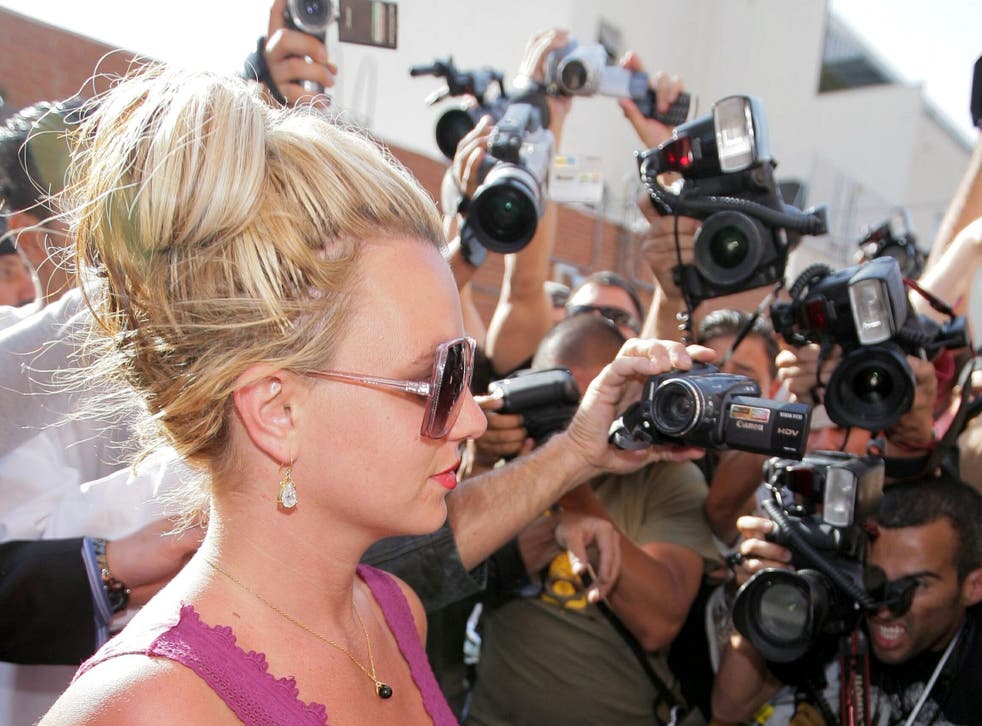
People spent years taking photos of Britney Spears. But did they ever  actually look? | The Independent

“I’m Miss American Dream since I was seventeen
Don’t matter if I step on the scene
Or sneak away to the Philippines
They still gon’ put pictures of my derriere in the magazine”

– Piece of Me by Britney Spears (2007)

One magazine editor admitted that at the time of Britney’s well documented breakdown, paparazzi photos of her were going for $1 million apiece. Yes, you read that right. Can you imagine? Naturally, this has caused a frenzy over the years with blood thirsty paparazzi seeking to snap Britney in compromising positions. There were disheartening scenes of Britney’s breakdown being the question on a family game show – something I found highly shocking and distasteful.

It’s interesting that we seem to often detach the idea of personhood from celebrities which makes it easy to criticise and cuss them. They often feel so far removed from our lives that their feelings don’t seem to matter too much. We are living in a different time (supposedly) but I don’t think it would take much for this to occur again – another celebrity being hounded and pushed to breaking point by the media. We could shrug and argue that is the way the cookie crumbles but consumers are arguably the most important part of the media machine. Yes, tabloids create the horrendous content but we never fail to eat it up! They rely on us buying magazines and engaging with online content in order to create demand and make money. So, we may play a much larger part than we think in all of this…

Holding On to Hope

What does the future hold for Britney? Well, we don’t know. But I’ve been careful to not use the word ‘downfall’ since the connotations are of a point of no return. Yet, I feel that is far from where she is at the moment – she’s fighting her conservatorship and has a very loyal following behind her as she does. There’s been a recent victory in her legal battle as a professional co-conservator, Bessemer Trust has now been appointed by the courts, meaning Britney’s father, Jamie Spears, no longer has sole control over her estate. Not quite total freedom, but a small victory to celebrate in an on-going war.

An Honest Review: The Trials of Gabriel Fernandez


Trials of Gabriel Fernandez poster

TW: References to child abuse, neglect, physical abuse and domestic violence

I write this review with a heavy heart. In all honesty, I haven’t even finished this docu-series – I started today and am on episode 5 out of 6 – but I feel so strongly about the content that I will write a review of my thoughts so far anyway.

I myself wasn’t aware of the case of Gabriel Fernandez before this series. However, the UK is not a stranger to such cases, with the case being reminiscent of the ‘Baby P’ case in London that received heavy media coverage and exposed numerous flaws in our social system services which helped to enable the abuse. In summary, Gabriel died at 8 years old in 2018 after several months of abuse at the hands of his mother and her boyfriend. The case covers the trial of the perpetrators but also looks more widely at systematic flaws that prevented the abuse from being stopped. The series covers so many themes I could not possibly do it justice or unveil all my thoughts; however – I will try and do my best!

One thing that was different about the reaction to this case was that the District Attorney of LA decided to prosecute the social workers who were aware of or working on the case. Initially, when I heard about this I applauded in my head – the logic behind it seemed straight forward; they were made aware of the chain of incidences which clearly indicated removing Gabriel from his home was necessary but yet they failed to act accordingly. However, as the series progresses it seems that prosecuting the social workers seem insufficient in comparison to the size of the problem. One of the colleagues of the tried co-workers states she thinks they are scapegoats in this case and I suspect she might be right. After all, several members from the sheriff’s department also visited Gabriel’s house – the site of the abuse – and failed to intervene or detect such abuse was happening. So why weren’t the visiting police officers arrested? If you’re going to use that same logic to arrest certain parties then use it consistently and arrest them ALL. It does indeed seem suspicious that law enforcement received such immunity.

It is also quite annoying that systematic issues within large organisations are highlighted but never dealt with. By arresting and firing different staff within bureaucracies the problem doesn’t automatically disappear. If the system is inherently flawed then those staff will be replaced by people that will only continue to enforce the flawed system. Authorities need to put it in the leg work into changing work cultures, changing legislation and conducting appropriate reviews on their operations. Systematic change won’t happen overnight but if the failures aren’t properly addressed another tragedy could strike until it happens.

Something that struck me throughout was that not a single person – his teacher aside – thought to speak or interview the victim himself, Gabriel. If the police or members from social services wanted confirmation of details or verification of Gabriel’s welfare or state of mind – they asked the parents. This fact frustrated me because Gabriel was eight. Of course in some cases the children are too young to adequately express themselves but that wasn’t the case here. If Gabriel had just been given the chance to speak confidentially to someone things may have been different. Abuse typically thrives on secrecy. If the parents themselves are the perpetrators then, of course, they would say whatever’s necessary to ward people off the scent of their crimes. And that’s just what they did. The failure to consult Gabriel or actually listen to his cries – he was actually quite vocal about his abuse -indicates a wider problem. Where in the midst of everything the children are ironically forgotten; or the adults around them make the decisions affecting them but they themselves are never consulted. In this case, prioritising Gabriel’s mums right to custody of her child over Gabriel’s safety/welfare and right to live ultimately cost him his life. If predominately dealing with children such services need to adopt models with children and their rights at the centre.

Although I would recommend this docu-series, I would definitely warn that this is by no means an easy watch. It will make you feel uneasy, angry and frustrated. On the plus side, it does dig deep into the wider issues that Gabriel’s case highlighted. They also interview a wider range of experts and people involved or affected by the case – from a journalist that broke the story to one of Gabriel’s classmates who continues to mourn for him. Not many stones are left unturned and this is helped by the fact it a docuseries. If you feel it may be intense, simply take it one episode at a time but definitely do give it a watch.

The trailer for the Netflix docu-series can be found here.