Don’t you feel the fatigue of always been targeted my adverts?
Buy this! Try that! 30 Day Free Trial! Two for the Price of one!
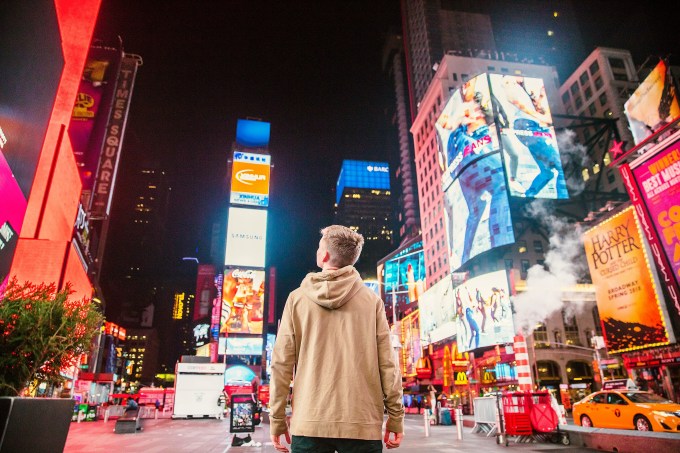
There’s so many of them and often I’m glazed over, in an indifferent state. But equally, there are times when I’m just trying to simply gather my thoughts and then I look over, perhaps whilst standing at the train station, and BAM I spot an advert. Intrusive, bold and pushy. Selling me something shiny and trying to convince me I can’t live without it. It’s like we can’t be left alone for a split second.
I open my emails, filled with ads and newsletters aggressively trying to sell something you likely don’t need or can’t afford. Same with TV. Same now with many streaming sites, as they embrace advertising in order to offer cheaper tiers of membership. And don’t get me started on podcasts – even on Spotify Premium they’re now rife. There’s literally no refuge. Unless you fork out the money that is, and who has the time for that.
Often, the ads are irrelevant and not of interest. And even if it is I’m often sceptical thinking that the product or offer being pushed out has some small print designed to catch me out. It’s why I barely ever sign up for free trials because I fear suddenly being caught in a web, trying to escape a service I don’t even like, use or intend to use long-term (think meal prep kits, exercise classes and streaming subscriptions). As you’ll know, based on experiences with customer services, if I can avoid having to fight customer services on the phone, then I will.
Instagram is where I can easily fall prey, so I have to be extra vigilant. Advertisements gently slip onto your timeline in the form of glossy, carefully manufactured content from influencers. Sometimes they’re so good you don’t even realise they’re an ad, especially if you’re not in the habit of properly reading post captions. Even the other day I saw an influencer advertising a spa getaway somewhere in the UK. I’m a sucker for a weekend getaway and a hot tub (a killer combo, if you ask me) so I perked up. I instantly went to her page and started looking through the hotel page. I closed it immediately after seeing the price per night because it was ridiculously expensive. Very annoying but I’m sure my bank account was thankful for my moment of wisdom.
How do you feel about adverts? Have you fallen for any against your better judgment that you can look back on at laugh at now?
‘I miss the days when you could just go to friends’ houses and be welcomed’
Someone said something along those lines the other days and I immediately thought ‘I don’t’.
Imagine: you’ve just logged off after your last work meeting the day. Tired is not even the word for how you’re feeling. Dinner is ready and you already have a film in mind for the evening. JUST as you’re about to press play on the film – the doorbell rings.
I’m not even sure I was old enough to properly experience those days but imagine the hassle of having to welcome people into your home, unexpected and uninvited, at various hours of the day. Very stressful indeed. Particularly when you think about the energy and effort that often has to go into hosting people. It’s energy and effort I’m sure people these days are still willing to exert – just not without warning.
This sentiment plays into the wider idea that people are increasingly less accessible. And I suspect this is true. It’s ironic too considering we’re more well-connected tech-wise than we’ve ever been before. We’ve all had the scenario with someone close to us where you want to meet up with them and you have to flick through diaries – sometimes months ahead to find a feasible date that works for both of you. People in general have become less accessible and lonelier. Probably not a coincidence I suspect.
Even I often find having a social life, as much as I enjoy it, sometimes can feel like a part-time job. I’m always grateful once I’m around people but sometimes I feel like energy is always in short supply, particularly when social plans are made after work, which has used up all my energy – leaving me shattered and chewed out!
Back to this idea of accessibility though – I don’t think it’s necessarily a bad thing but it just depends on the level and frequency. For example, you may be inaccessible at certain points in a day or week and that’s fine, if not necessary for your sanity. Also, how do we define accessibility? Typically, how easy it is to get through to people by phone. This becomes a problem if you want to be accessible a lot because you feel you can’t really detach from your phone – always paranoid when you do THAT will be the moment someone has an emergency and needs you. Likely a delusional thought but one I have often, nonetheless.
Many people are actively trying to limit their screen time and I support this. In fact, I should probably jump on that train soon but for now, using do not disturb and making sure calls are scheduled (as opposed to spontaneous!) are my happy medium.
How do you manage your screen time and stay accessible to others? Any tips?
“These days, loneliness is the new cancer – a shameful embarrassing thing, brought upon yourself in some obscure way. A fearful, incurable thing, so horrifying that you dare not mention it; other people don’t want to hear the word spoken aloud for fear that they might too be afflicted, or that it might tempt fate into visiting a similar horror upon them.” (p343)
Summary
This book follows 30-year-old Eleanor as she discovers the beauty of friendship and undergoes an internal transformation that gives her the strength to confront demons from her past. (I’ve probably made the book sound less interesting than it is but that’s because I’ve tried to keep my overview just provided spoiler-free.)
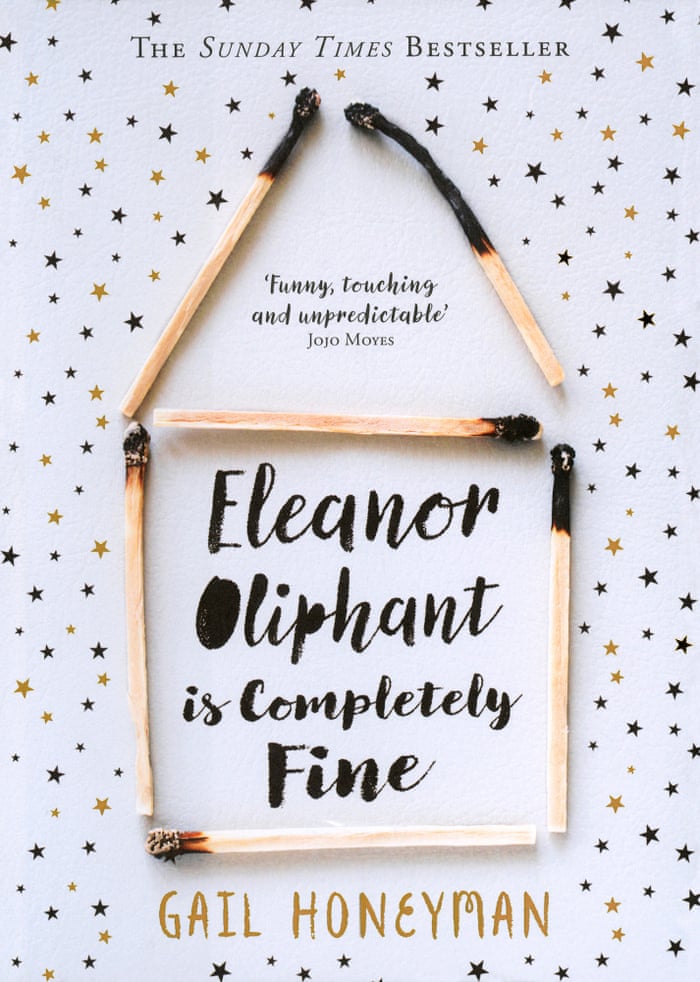
A version of the book art commonly seen on UK bookshelves. The book sold really well in the US & UK.
This book was published in 2017 and admittedly I’ve heard a lot of hype around this book, so it’s been on my radar for quite a while (I would say about 2-3 years). But like with many things that gain a lot of chatter, I didn’t want to feel pressured into reading it because everyone else was, so I made a mental note to read it when the time was right. Nevertheless, expectations were high and I was excited to get stuck in and figure out what on Earth this book was about. The title doesn’t give away much and neither does the blurb so it is one of those ‘you have to read it for yourself’ type books, if you want to really understand the themes, characters and general storyline of the book. Please be warned that this book deals with themes of suicide, depression and emotional abuse.
The main point of intrigue for readers of this novel will be the series of events behind much of Eleanor’s trauma, although hinted at early on in the book, the details are slowly revealed later on.
Style
The novel is narrated in first person (from Eleanor’s perspective) and is split into three parts; Good days, bad days and better days. I found the choice of first-person narrative to be very beneficial to me as the reader, since Eleanor seems to observe the world, as well as the situations and people she encounters, in a unique and profound way that would be lost in, say, third person, for example. In particular, I loved how it made me feel like I was in her therapy sessions with her, as she went week after week – each session giving her a life-changing revelation.
Thoughts
My impressions upon reading are that I can see why this book captured the imagination of many readers when it was first released. Eleanor is a very quirky, and ultimately a likable character.* She tends to be very savvy, intelligent and kind-hearted; even if not obvious to those she meets at first, those character traits always come through or stand out to them by the end. Her colleagues, for example, find her peculiar and so tend to keep interactions with her to a minimum. Although the peculiarity may be an understandable first impression, Eleanor, as you grow to learn the more you get to know her, is a classic case of why appearances (and first impressions) can be deceiving.
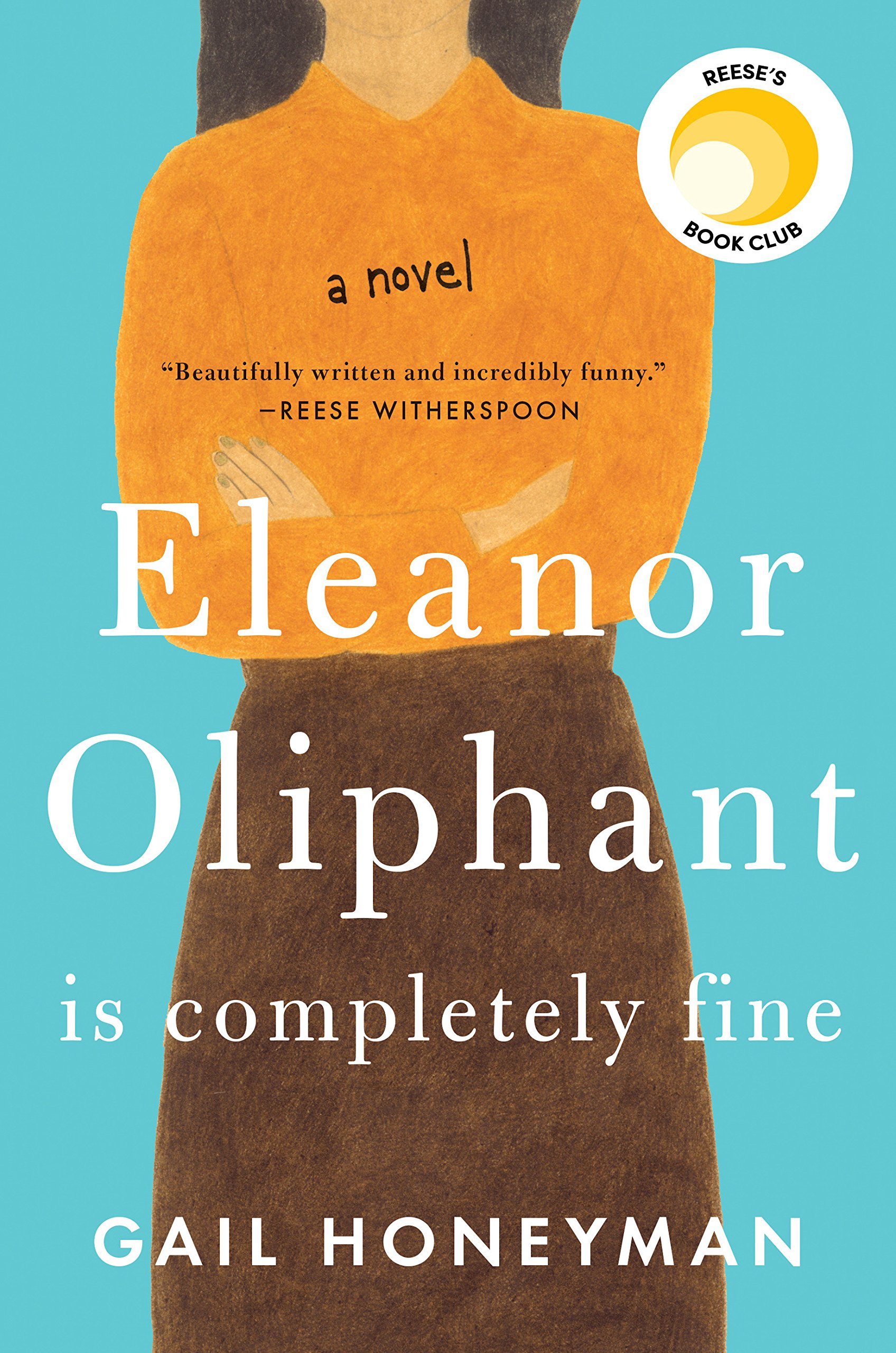
Alternative book art
Perhaps due to an a typical childhood, Eleanor is usually not afraid to say things how it is which leads to many awkward (and yet hilarious) public encounters which definitely feel more unique to her as an individual. For example, there was an amusing scene in the later half of the book, where Eleanor is ordering coffee with a friend, and when asked what her name is so it can be placed on her drink, she kicks up a fight, ensuring she has the right to privacy. There are not many books I read that make me laugh or smile often and this one achieved this purpose so, props to Gail for that!
My only qualm (yes, there is one, unfortunately) is that it did feel like, when it comes to Eleanor as a character, she came across as quite caricature-like at times and almost unbelievable. I mean, what 29-30-year-old individual would struggle to order pizza in this day and age? A scene in a similar vein takes place where Eleanor buys a new laptop and seems to be really unfamiliar with how to set it up because she’s never owned one before. Another scene that felt slightly unrealistic in an age where tech permeates pretty much most areas of our lives.
However, I will say for every unrealistic trait Eleanor has, there is one that resonates strongly with readers. Whether it be; the loneliness, the frequent bafflement at human behaviour, the overwhelming desire for companionship & friends, the underlying grief, that niggling ‘what is the point of this?’ feeling of life, the depression. It’s all very real stuff, the ‘baggage’ many of us carry from day to day but don’t always see reflected in the characters we read about in books.
*It’s also suspected, but not confirmed that Eleanor is neurodivergent.
Conclusion
Ultimately, this novel is one about an individual’s journey of growth, self-acceptance and change. Although it may take a while to warm to Eleanor, Gail succeeds in creating a character who you can’t help but root for and empathise with. She’s brutally honest about her flaws and mental health issues, making her relatable, if not iconic, for many readers who have or are currently walking in Eleanor’s shoes.
Trigger warning: I touch on the topics of mental illness, addiction and eating disorders in this piece.
Watching Demi Lovato’s docu-series on Youtube ‘Dancing with the Devil’, which chronicles their journey with addiction and their road to recovery, got me thinking this weekend about just how fragile we as humans are. We are flawed, often egotistical yet constantly learning as we navigate each stage of life. Why is it then that we love to put fellow humans on pedestals, elevating them to a standard even they themselves often feel they cannot reach?
This is one of the things Demi touches on during the documentary, as over the years they have become somewhat of a role model for many when it comes to mental health advocacy. However, what no-one knew was that they were battling with addiction on the side lines; making the public perception of them and what the real Demi was like as different as night and day.
I honestly could not imagine the amount of pressure such expectations can place on a person. You have 5,10,15-year-olds saying your art has changed their lives or got them through a hard time and that one day they want to be like you. It would be impossible to shrug that off without feeling some sort of burdensome weight of a duty to live up to this fantasy they have moulded of you.
Humans were not designed to be worshipped (for several obvious reasons.) A key one being we don’t have it all together, we don’t possess the perfection that is exclusively associated with God. Being idolised can definitely build ego but it can also create a quick path to inner destruction. Celebrity worship is often reductive – individuals are often being lauded all the time for a carefully crafted perception of themselves they and their teams have worked hard to portray. Or more simply, it could be because of looks alone or a talent like basketball or singing that makes people all googly eyed. Unfortunately, such talents are fleeting – they can take years to build and be gone in a matter of minutes.
So, in other words, we’re never really worshipping celebrities for who they are because we’ll never be privy to the real them, we’re in love with who we think they are. The unrealistic expectations of others become internalised which can then manifest themselves in toxic ways – for Demi, for example this was through disordered eating. This coupled with the toxic nature of cancel culture means there’s also a pressure to never step over the line. Making mistakes (whether publicly or not) is part of growing up but nowadays, one wrong step and your career is in jeopardy.
Demi isn’t the only one who has recently grappled with mental health in the public eye. Naomi Osaka recently withdrew from the French Open after being forced by event organisers to since they wouldn’t allow her to pass on media interviews for the sake of her mental health. Jesy Nelson, former member of the British girl band Little Mix recently left the band, stating reasons related to the protection of mental health. Similarly, in the past many other celebrities have been open about their struggles with mental illness – Billie Eilish, Kanye West and even Mariah Carey, to name a few.
Of course, fame hasn’t been the direct cause of mental health struggles for many celebrities but it can certainly exacerbate them, especially if they previously existed before fame. For Naomi and Jesy it seemed as if they had reached the point where mental wellbeing and peace could not exist alongside the environment they were working in, so an ultimatum was reached. The fact many people, famous or not, have to choose between their work or mental wellbeing is very unfortunate. It shows – despite all the lovely ‘discussions’ we are having around mental health – we still have a long way to go in properly providing the related support people need for recovery, treatment or prevention.
_______________________________
Thanks for reading! If you’re interested in reading more on celebrity culture I wrote about some thoughts after watching the Framing Britney Spears documentary which you can read here.
I was watching the Framing Britney Spears documentary on a weekend two weeks ago and it got me thinking a lot, so I thought I would share some thoughts. In particular, it made me think of how sad a word we live in where people would start to capitalise of a person’s low points in life. For those unaware of the much talked about The New York Times documentary, its release comes at a time when the #FreeBritney movement is in full swing. Although I am aware of the rough purpose of the movement, I wanted to watch the documentary myself to learn about the wider context of how Britney Spears’ conservatorship came to be.
Conservatorships, from my understanding seem to be legally binding arrangements made when a person is deemed unfit to make decisions concerning their own welfare. The parties these arrangements concern are often mentally ill or elderly. Conservatorships cover different areas of a person’s wellbeing, in Britney’s case the documentary explains that her’s means she is no longer in control of her finances or medical care – theses are controlled by other people, which up until recently has mainly been her dad. This is where things get iffy and become quite speculative – we don’t completely know how Britney feels about the arrangement or what her dad’s intentions have been all of these years. However, the documentary does give some indication to these questions so it’s definitely worth a watch.
You want a piece of me?
“I’m Miss American Dream since I was seventeen Don’t matter if I step on the scene Or sneak away to the Philippines They still gon’ put pictures of my derriere in the magazine”
– Piece of Me by Britney Spears (2007)
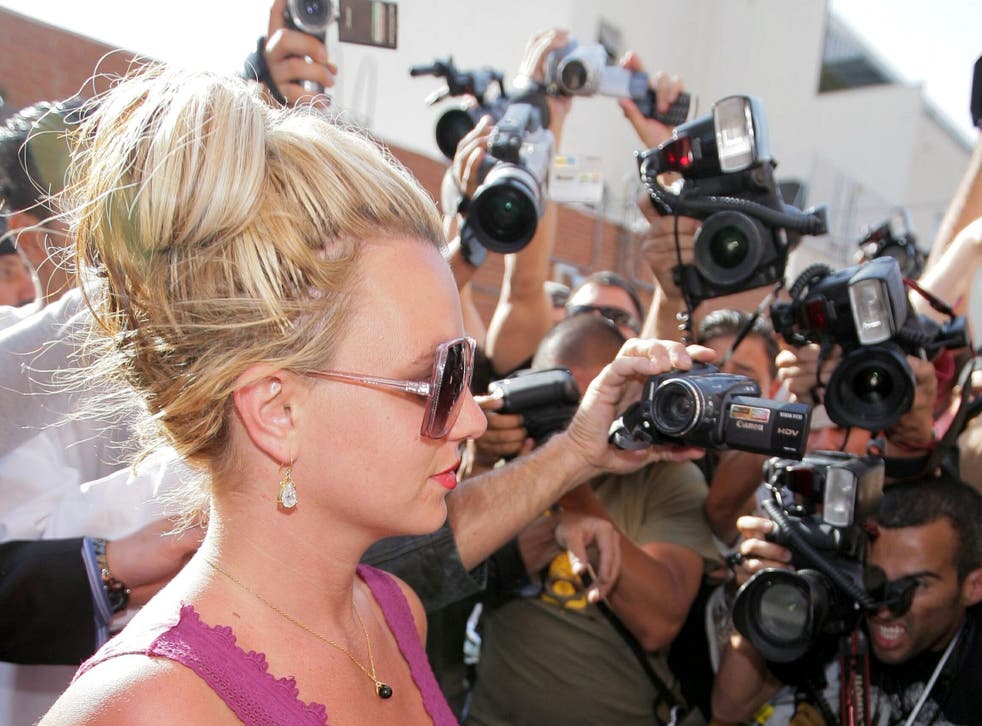
One magazine editor admitted that at the time of Britney’s well documented breakdown, paparazzi photos of her were going for $1 million apiece. Yes, you read that right. Can you imagine? Naturally, this has caused a frenzy over the years with blood thirsty paparazzi seeking to snap Britney in compromising positions. There were disheartening scenes of Britney’s breakdown being the question on a family game show – something I found highly shocking and distasteful.
It’s interesting that we seem to often detach the idea of personhood from celebrities which makes it easy to criticise and cuss them. They often feel so far removed from our lives that their feelings don’t seem to matter too much. We are living in a different time (supposedly) but I don’t think it would take much for this to occur again – another celebrity being hounded and pushed to breaking point by the media. We could shrug and argue that is the way the cookie crumbles but consumers are arguably the most important part of the media machine. Yes, tabloids create the horrendous content but we never fail to eat it up! They rely on us buying magazines and engaging with online content in order to create demand and make money. So, we may play a much larger part than we think in all of this…
Holding On to Hope
What does the future hold for Britney? Well, we don’t know. But I’ve been careful to not use the word ‘downfall’ since the connotations are of a point of no return. Yet, I feel that is far from where she is at the moment – she’s fighting her conservatorship and has a very loyal following behind her as she does. There’s been a recent victory in her legal battle as a professional co-conservator, Bessemer Trust has now been appointed by the courts, meaning Britney’s father, Jamie Spears, no longer has sole control over her estate. Not quite total freedom, but a small victory to celebrate in an on-going war.



 TheArtofChatter