Can I speak to a human please? My war with tech in customer service

Sometimes I’m certain tech is going to be the death of us all.

At other times I have moments of excitement and intrigue when I think about what new opportunities tech will unlock for us as a species. But today let’s focus on one of the roots of my pessimism. Customer service.

Tech has been used very strategically by several companies to make dealing with customer queries more efficient. Snazzy websites with FAQs, AI powered chatbots and ‘virtual assistants’ online and on the phone who can point you towards the best answer possible. Sometimes they work very well and you think – thank God for that. However, at other times they lead you hopelessly in circles, teasing you with the promise of an answer BUT NOT ACTUALLY GIVING ONE. It’s at those times I have to take deep breaths to protect my sanity and my phone screen (which is one step away from being thrown at the wall).

I recently found myself in need of documents from my bank and was of course advised by the website (one bit of tech) to use the banking app (another bit of tech). I did as I was told but the app actually couldn’t fulfil the demand so after a few tries I reluctantly decided to go to the bank. Even that decision wasn’t made easy because the physical sites of many high street banks are slowly all shutting down. All the ones in my borough of London were closed down, so I had to venture out.

When I got to the bank, after a long journey there and I finally get to see a member of staff after waiting ten or 15 mins, what happens? They ask me if I’ve used the app and if not, if they can show me how to use it. Part of me wanted to scream. What is the point of me being here if all roads lead back to this god forsaken app? Can no service be provided independent of it? It’s enough for me to hopelessly despair at times.

Human, where art thou?
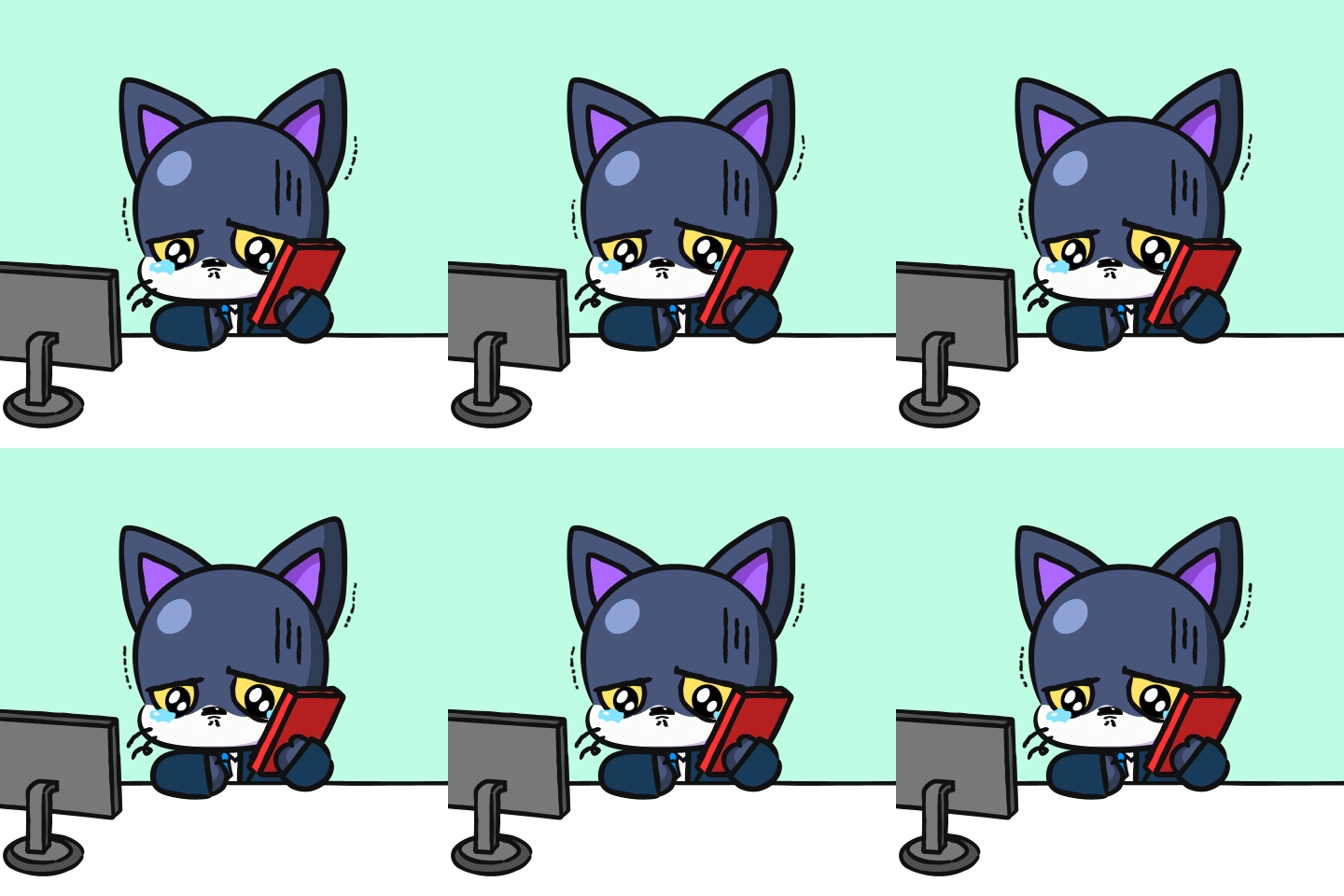
These days there’s a thrill and pleasant surprise to hearing a human voice on the phone. And that’s mainly because companies make you work SO HARD to access one. You have to talk to 101 AI bots who you tell your problem to (in over enunciated English because they understand nothing less), only for them to say they don’t understand a thing you’re say. Repeat this scenario about 3 – 4 times and you have a typical phone call to your bank or utility provider. Humans, of course, have their own problems, sometimes I’ll be forwarded back and forth between teams on the phone like cow on a farm. No, they’re not perfect, but I always feel like I am in slightly better hands and that I’m at least one step closer to a solution.

In terms of human access for customers – it’s a luxury. And, you’ll notice, if you observe carefully, that there’s also a hierarchy. People who are likely to buy new products will always be put through to humans faster. As for existing customers who are likely to be making complaints or trying to be processing returns? You’ll have to jump through a few hurdles. Maybe you’ll get through to a human, maybe you won’t. It’s up to the company gods and what they’ve decided. Sad stuff really – especially when you’re in the midst of it. There’s an incorrect assumption that it’s mainly those that are elderly and/or old fashioned that like to have human customer service. This is not true, young people like myself are increasingly valuing human assistance too. Why? Because it’s not necessarily an age or generational thing at this point.

______

Do you have any bad customer service stories to share? Feel free to comment and share so we can release our anger together 🙂

Alternatively feel free to read more of my thoughts on shopping and customer service here.
The pursuit of ‘getting yourself together’ and why we often fail at it

Recently I watched a video on YouTube, in which a woman talks for 12 mins essentially about how her life, is anything but in order. You can watch it here – it’s called ‘I’m a 33-year-old woman with no life’. To provide some context, The Youtuber featured is divorced and currently job searching. And although she explains she has the social support of friends, this is something that perhaps would have surprised her younger self, who expected her to be happily in love and professionally thriving at her now age (33.) I’m sure many can relate to this feeling. Many women, in particular, often put a timeline on certain experiences or key moments they want to happen in their lives – i.e. having a baby at 26, owning a house by 35, etc. But you know what they say about plans we make. God laughs. Very loudly.

Although only about two months old, the video has blown up – receiving over a million views in that short amount of time. So, a natural question for me, as a self-proclaimed curiosity queen, once I saw the views it was racking up was ‘why?’. Two obvious answers you may come to:

  1. Why not? It’s good/interesting content that naturally attracts people over time.
  2. Maybe it’s more of a schauenfraude situation where people watch to gain comfort from the YouTuber’s misery. (I.e. ‘Thank God, I’m not her – my life sounds much better.’)

I did of course consider the above but both were quickly dispelled when I read through the comments on the hunt for an answer to my question – why was this video becoming so popular?

I was quite surprised to see that so many people resonated personally with the video. Many felt that they had fallen short of their own expectations – particularly female commenters and were just relieved to have their insecurities or perceived sense of stagnation mirrored back to them.

There was something about this YouTuber’s story that simply resonated with viewers even if it was only a chunk of the story and not it’s whole. And perhaps, her straightforward honesty and approach were refreshing on a platform where everyone feels they have to be scripted, overly bubbly or dramatic. They’re extremes that have worked for content on YouTube for a while, and to some extent still do. However, as the rise of this video shows, there seems to be a growing desire for authentic content. Where creators are more forthcoming about their flaws and instead of presenting themselves as experts that viewers must go to – perhaps creating more of a community. This may simply mean instead of having a video that gives ‘expert’ advice, you admit you don’t know and ask people for their advice on the topic.

__________________

The Mystery of Love 2.0 – when love and tech collide: A Review of The One and Love Alarm (Season 2)

I’m sure if you surveyed the average person, they would tell you that they wanted to find love (if they haven’t already.) However, that journey is a tough, steep one that holds many challenges for several reasons. Social media, and much later, dating apps have already transformed the dating process massively in a relatively short space of time. The two most recent dramas I’ve watch watched on Netflix explore how technology (and science) could further impact dating and relationships in the future and what the effects on individuals lives could look like. Worth a watch or not? Have a read and decide.

The One

The One, Netflix review - the downside of scientific matchmaking
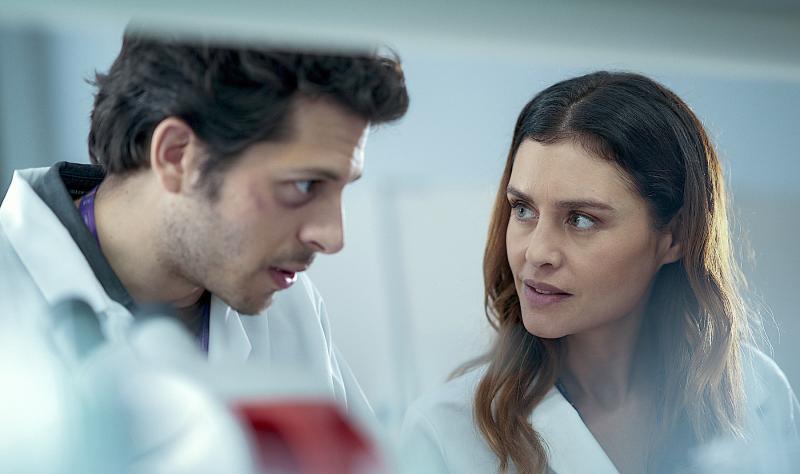
Rebecca Webb (right) with co-founder of The One and close friend from university days, James (left).

This is a new British sci-fi drama and Netflix original consisting of 8 episodes, based on a book of the same by John Marrs. I watched it recently after seeing it in my upcoming list of shows and being intrigued by the blurb (the apps good ol’ algorithm never seems to fail, eh?) In the drama ‘The One’ is the name of the company which provides a matching service based on DNA. It’s as simple as you think – people take swabs, send them to the company and find out who their biologically destined match is! The series follows Rebecca Webb, co-creator and CEO of The One as she goes through desperate lengths to find happiness herself and maintain her position of power at the top of the company. Yet, as the series goes on we find out Rebecca is a woman with a lot to hide and this begins to look less and less possible as secrets are revealed and lives are lost. Definitely worth a watch.

Although, a slightly deterministic approach to love upon initial reading, the interesting thing about this matching approach is that choice does play a huge role in the success of matches. This is contrary to what many of the users of the service seem to think in the drama. Their mentality is ‘we’ve been ‘matched’ so you must be my soulmate, we’re meant to be!’ Which, as you watch the drama, will find to not necessarily be the case. DNA alone cannot be a sole indicator of a good partner, several other factors have to come together to create a successful relationship. As many of the characters discover – secrets, selfishness and lies can easily put an end to any potential happiness you may have or think you serve with your match.

Love Alarm (season 2)

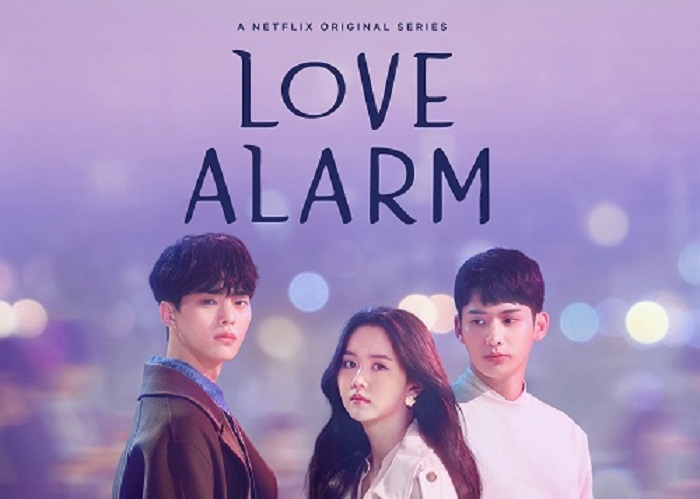
This K-drama is based on a popular web-toon (online comic) of the same name. In the drama, relationships are largely dictated or guided by a widely used app called Love Alarm, which is able to notify you if anyone within a certain radius from you has feelings for you. It was originally created by the protagonist’s (Kim JoJo) former classmate, Chon Duk-gu – an illusive and shy character, who admits he created the app because of his difficulty deciphering the feelings of people around him. To simply the app, it helps users answer the question ‘does my crush (or partner) like me back?’

Is Love Alarm season 2 getting renewed? Here is everything you need to  know!!
Promotional poster for the show – from L to R – Sun-Oh, Kim JoJo and Hye-yeong

For those that have battled with frustration caused by mixed signals from someone they liked, this app sounds quite dreamy. Yet – since there’s always a yet – it doesn’t take long to discover it, like the DNA matching service in The One, has its problems. We don’t necessarily see how widespread usage of the app is working, but rather we see a microcosm of its effects through the drama’s main characters. One obvious effect it provides a very awkward and public display of unrequited ‘love’. If two individuals are in close proximity of each other the app will notify one of those people that ‘someone who loves you is within close distance’. However, for the other person…it won’t which can be both scary and heart-breaking.

The app starts to act as an obstacle for characters who are in relationships on the show. For example, Sun-oh’s girlfriend reveals that she dreams about him ringing her love alarm – something he is not able to do when they’re dating. Similarly, due to events from the previous season, Kim JoJo is not able to ring the ‘alarm’ of anyone she likes because she has a feature called a ‘shield’ installed on her app. In her relationship with Hye-yeong, this slowly starts to torture her as she begins to suspect that maybe this is saddening her boyfriend and causing him to doubt her feelings for him.

To Conclude…

Overall, I would say that both dramas show how technology – as we undoubtedly already know – can do more harm then good, even if created with the sincerest intentions. We already use much tech at work and in the home successfully. But with widespread and frequent usage in many circumstances we run the risk of using tech as a crutch, much to our own disadvantage. It tends to happen gradually and then – next thing you know, you can’t remember the birthdays or phones numbers of your friends with your phone, for example! (Based on a true story.) In both shows, we see technology has altered the process of dating and its requirements for many people. The agency seems to shift from self to tech so instead the characters fall into the trap of not thinking for themselves enough. Don’t get me wrong, love is an amazing thing but I think it needs a bit of mystery and effort; surely then the product is more rewarding?