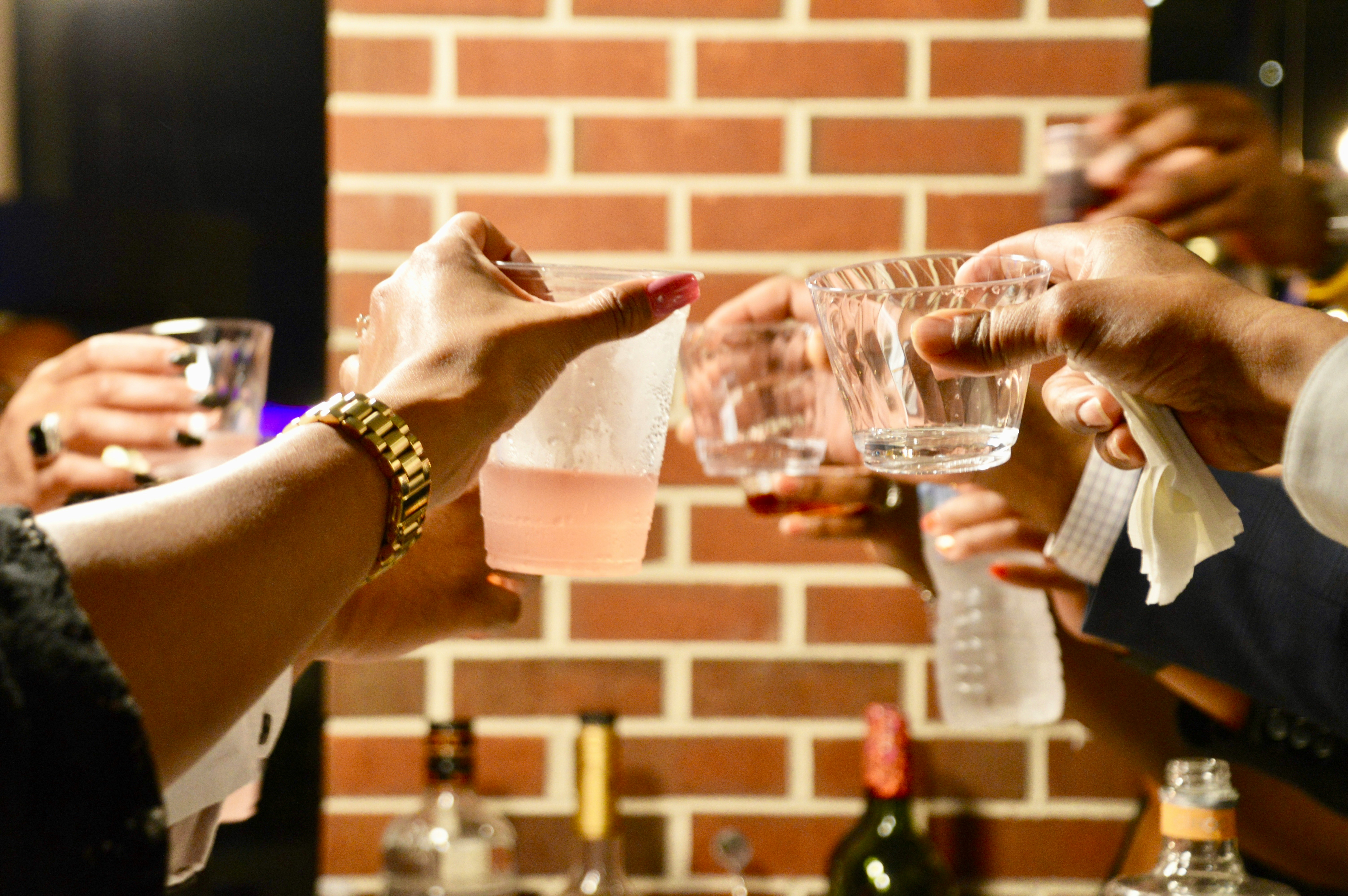
Cheers to that: the stuggle of a selective social drinker

Society has apparently gone through a shift. Many are ditching alcohol to pursue sobriety. Or so that’s the story I’ve seen on many lifestyle focused newspaper articles and podcasts. 

Alcohol Change UK, for example, states that 1 in 5 adults in the UK (20%) report not to drink alcohol. The trend of being ‘sober curious’ has increased over time, particularly amongst GenZ who are seen to be more health conscious than previous generations.

And to some extent, talking to people I know about why they stopped or reduced their alcohol consumption does validate these claims. However, one thing I’m noticing is that many of the restaurants and bars are not in on this shift. It’s an interesting mismatch since businesses are usually on the forefront of adapting their offering to cater to trends. I mean, it’s not necessarily an expectation but is typically what makes business sense.

I myself am not a big drinker, it doesn’t mean I’m teetotal. However, I find myself to not be a massive fan of the taste of most types of alcohol. That compared with the fact mocktails and soft drinks are always cheaper means drinking alcohol will never be my default preference – even in pub or bar. When I do drink it will indeed be socially and usually, whether I like to admit it or not, due to some underlying social pressure. You deciding not to drink often becomes the topic of conversation, people often acting as if they’ve just discovered you’re joining a nunnery. It’s quite tiring at times. All a girl wants is to drink her lemonade in peace, but no can do. 😅

Despite 20% of the UK not drinking, you’ll be surprised that I still go to places, request mocktails at their bar and get blank stares from the bartender. Typically, I’ll see them struggle to answer, or get a blunt no and have to succumb to a soft drink or tap water. This has happened more often than expected. Something I’ve also noticed is that a lot of offers for food involve an alcohol and tend to not have a non-alcoholic alternative. I remember going to a spa many years ago with a friend and being greeted on arrival with prosecco. It was a lovely visit but when asking if they had any drink alternatives they just answered ‘no’. This indicates to me they’ve never even considered the fact guests booking the voucher may not drink. How bizarre and how frustrating.

Some bars and restaurants are doing a great job though, embracing a full range of mocktails on their menu and non-alcoholic beers and gins. What I appreciate the most is creativity, having a tailored menu in this area shows you really value all customers and put thought into everything you offer – not just the alcoholic choices because they’re more popular.

Overall I would say yes, The Alcohol Change UK stats show that non-drinkers are indeed a national minority still. However, catering to just the majority does not mean you’re catering to the whole, and to be fully inclusive – that’s important. Yes, it can be costly to implement but it’s always a worthwhile investment.

___________

Photo by Andra C Taylor Jr on Unsplash
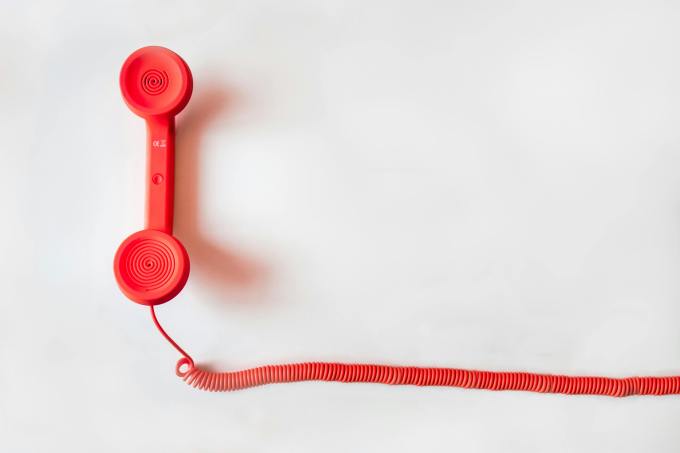
Can I speak to a human please? My war with tech in customer service

Sometimes I’m certain tech is going to be the death of us all.

At other times I have moments of excitement and intrigue when I think about what new opportunities tech will unlock for us as a species. But today let’s focus on one of the roots of my pessimism. Customer service.

Tech has been used very strategically by several companies to make dealing with customer queries more efficient. Snazzy websites with FAQs, AI powered chatbots and ‘virtual assistants’ online and on the phone who can point you towards the best answer possible. Sometimes they work very well and you think – thank God for that. However, at other times they lead you hopelessly in circles, teasing you with the promise of an answer BUT NOT ACTUALLY GIVING ONE. It’s at those times I have to take deep breaths to protect my sanity and my phone screen (which is one step away from being thrown at the wall).

I recently found myself in need of documents from my bank and was of course advised by the website (one bit of tech) to use the banking app (another bit of tech). I did as I was told but the app actually couldn’t fulfil the demand so after a few tries I reluctantly decided to go to the bank. Even that decision wasn’t made easy because the physical sites of many high street banks are slowly all shutting down. All the ones in my borough of London were closed down, so I had to venture out.

When I got to the bank, after a long journey there and I finally get to see a member of staff after waiting ten or 15 mins, what happens? They ask me if I’ve used the app and if not, if they can show me how to use it. Part of me wanted to scream. What is the point of me being here if all roads lead back to this god forsaken app? Can no service be provided independent of it? It’s enough for me to hopelessly despair at times.

Human, where art thou?

These days there’s a thrill and pleasant surprise to hearing a human voice on the phone. And that’s mainly because companies make you work SO HARD to access one. You have to talk to 101 AI bots who you tell your problem to (in over enunciated English because they understand nothing less), only for them to say they don’t understand a thing you’re say. Repeat this scenario about 3 – 4 times and you have a typical phone call to your bank or utility provider. Humans, of course, have their own problems, sometimes I’ll be forwarded back and forth between teams on the phone like cow on a farm. No, they’re not perfect, but I always feel like I am in slightly better hands and that I’m at least one step closer to a solution.

In terms of human access for customers – it’s a luxury. And, you’ll notice, if you observe carefully, that there’s also a hierarchy. People who are likely to buy new products will always be put through to humans faster. As for existing customers who are likely to be making complaints or trying to be processing returns? You’ll have to jump through a few hurdles. Maybe you’ll get through to a human, maybe you won’t. It’s up to the company gods and what they’ve decided. Sad stuff really – especially when you’re in the midst of it. There’s an incorrect assumption that it’s mainly those that are elderly and/or old fashioned that like to have human customer service. This is not true, young people like myself are increasingly valuing human assistance too. Why? Because it’s not necessarily an age or generational thing at this point.

______

Do you have any bad customer service stories to share? Feel free to comment and share so we can release our anger together 🙂

Alternatively feel free to read more of my thoughts on shopping and customer service here.

Bearer of Bad News

We always put replies off when they involve the slightest bit of negativity or confrontation.

“No”

“I don’t want to go.”

“I can’t make it but thank you.”

For me as an overthinker, I’m usually toying in my mind about the best way to phrase these replies so I don’t come across as brash, harsh or hurt the person they’re directed to in the process. The problem is that thinking process can become so consuming you forget to actually send the reply! Suddenly days have ended and a week and a half has gone by. Or the person nudges you and that feeling of dread arises.

It’s not like that for all of us, of course. Some people don’t really put much thought into it and can easily say ‘no’. I’m not sure what their secret is. Perhaps, there’s a level of detachment to the words they’re saying which they may have mastered over time and which makes it easier to reject or confront people. The medium of tech probably helps make that easier.

But them aside, the average person tends to fret when having to be the bearer of ‘bad’ news. I see this even with the way employers communicate. If they take a while to get back to you about, say a job (or another random query), it’s most likely a polite no. Sometimes they’ll have a template response they’ll send, at others they’ve taken a while to respond because they’re trying to find the right word combo which allows them to break the news to you.

Ideally, we need to start being more confident with relaying such messages and trust that the other person will read it and land on their feet, even despite some initial unhappiness.

I woke up and started my day a few months ago with some amazing clarity. I had a lot of conversations I needed to respond to, so I realised now is the time. My mind was buzzing with the rare desire to tackle those ‘difficult’ conversations that had long overdue answers.

A friend’s invitation and a few opportunities I needed to decline.

A guy who I was talking to on an app who I needed to give ‘we’re not on the same page so goodbye’ talk too.

All these difficult conversations? Done in a matter of minutes. It’s amazing how much you’re capable of once the things that make you procrastinate or fear those tasks disappear. I’ve had the longing to have such moments of clarity again but admittedly haven’t since.

Ah well. It was nice while it lasted, I guess.

Photo by Andre Taissin on Unsplash

Above the noise: exploring the Cocktail Party Effect

I CAN’T HEAR YOU.

You’re out with a friend, after months of wrangling each other’s diaries for a free date to meet and this is all you keep thinking about as you sit together in a restaurant trying to catch up. Imagine the frustration.

They’re probably telling you about a dramatic day in their job or something heartfelt their partner recently did and you can’t hear a single piece of juicy information because the music is too darn loud 😠. This has happened to me too many times to count in recent months, if not years. It’s gotten to the point where the other day I joked with someone that it seems like 90% of adult life is shouting above music to speak to people. Can’t remember too well but I suspect I shouted that joke above loud music (as if to prove my point is valid.)

This is a common scenario that creates what I’ve recently discovered is called ‘the cocktail party effect’ – the ability to follow and hear one noise amongst numerous others. The only problem these days is that this ‘effect’ is failing – people are not as capable of it as they once were. This article in I news, explores the problem and hints it may be a precursor to hearing loss. According to a study cited in the article, 70% of people have trouble hearing conversations in noisy places – with Gen Z being the worst affected. For me it’s become unbearable to the point I’ll sometimes just sit there helpless in a group and drink my drink, planning my exit, partly to preserve my social battery and partly because I can’t hear a darn thing anyway so what’s the point in speaking. I often see others leave bars and just end up talking in toilets or amongst smokers at bar entrances in a desperate effort to get a quiet place.

I went to an event last week that had NO music in the background (I know, the horror) during its duration and I remember feeling a strange sense of peace. Yes, it was still loud since voices were rising in the air. But was I straining my ears 110% to hear a single word above a Calvin Harris song? No, and it made a massive difference to the connections and conversations I was able to have that night.

The loud music as frustrating as it may be, many might feel like it’s needed. It sets ambiance, a fun mood for the place and the night, as you settle into your seats. What’s the alternative? Just…nothing? That could be more awkward. Although, I see this perspective and am happy with the presence of music, I simply think it could be tuned down a little bit, for the sake of our ears and sanity, please.

______

PS: One thing I’ve heard does really help with this issue is ear plugs! I’ll likely be buying some soon, so I’m open to recommendations or any other tips you have for dealing with this.

Photo by Michael Discenza on Unsplash

Thought of the Day: Why don’t you like me?

A recent post on Instagram reminded me of the blunt truth that some people don’t like you and never will. The people pleaser in me feels very indignant about that reality, thinking ‘Surely there’s something you can do or say to make everyone like you. Maybe you just haven’t discovered what that is yet.’

But the reality is, it’s not true. And although being unliked can be controlled or addressed in some circumstances, particularly if you (perhaps unknowingly) caused the hostility, sometimes it can’t. It might sometimes be because of factors you can’t control or don’t know, and that can be very frustrating. It can feel like an unsolvable puzzle which, no matter how much head scratching you don’t get closer to finding answers. And it can suck particularly if the hostility comes from someone you think is amazing – it’s just that they sadly don’t view you the same way.

It’s why the Biblical command to love others (John 13:34) can be very trying at the best of times. It’s all smooth sailing when the love and kindness is reciprocated but when others don’t see your worth or like you – how do you just blindly do the same? Even I’m (admittedly) sometimes inclined to like or value people a lot less if I don’t feel they don’t like me. We get a dopamine hit from being loved, appreciated and cared for so it’s very easy to avoid or throw people to the wayside if they don’t give you that feeling through positive treatment. I mean, love between humans will always be conditional in some shape or form – even if we perceive it not to be. (It’s what makes the way God loves us so spectacular and special! 😊).

As humans, alone in our own strength, I’m inclined to believe it’s impossible to love the way John 13 commands. We’ll always need divine help for this. But how others feel or behave towards us should not dictate the worth and value we see in them. As the new year approaches, even if you’re going into it quite indifferent and with low expectations – perhaps we can put on our goal list to have the courage to love others more boldly.

Photo by Tyler Nix on Unsplash

#FreePalestine (please)

The News cycle has been very heavy over the last month or so. My timeline has been flooded with anger, despair and helplessness in the form of emotive tweets and distressing videos of lifeless or grieving Palestinians. I go to bed some nights with a heaviness that can’t be described. It’s easy for us nowadays to switch news channels and just actively avoid such headlines

When you’re younger learning about many of the grave injustices that have happened in the world to date – i.e. apartheid regime in South Africa, the Rwandan genocide – even chattel slavery in the 1600s you wonder how people were able to live their everyday lives knowing such horrific events were going on. Why didn’t anyone do anything, you think to yourself. How was it able to go on for so long and get so bad? Well, viewing the events that are taking place in the West Bank at the moment, I think we have our answer.

A few things to note:

  • This conflict didn’t just start in early October, it’s essentially one spanning over 70 years – many generations of Israelis and Palestinians have been involved. And sadly many Palestinians have grown up in this Apartheid system not knowing freedom.
  • Advocating for Palestinians to be free from occupation/this apartheid system is NOT the same as supporting Hamas and its activities.

Someone rightly said on social media, that such events taking place in modern day is even more frightening since we can see them take place with our eyes but yet can’t do much to intervene or stop it. This is why people have continued to take to the streets and passionately right to their local politicians. Grassroots efforts will have a limited effect here – we need those at the top to speak out and be proactive in the name of peace.

Even as people now open their eyes and try to bravely speak out against what they see as injustice against humanity – they risk being villainised, trolled and even losing their jobs! It’s a blatant silencing tactic – hanging someone’s livelihood above their heads to keep their mouths shut. It’s quite ridiculous and shocking to be honest considering free speech is meant to be the beacon of the West.

For those with faith reading this, let’s put everyone affected in prayer – God can do what humans believe to be impossible. We’re instructed to call out injustice and protect our brothers and sisters across the world, regardless of creed or colour.

_______

For those wanting to educate themselves (and please do):

  • The publisher, Haymarket Books is offering free ebooks on the history of Palestine here.
  • The news outlet, Vox has an informative series around Palestine on YouTube.

*Photo by Ömer Yıldız on Unsplash

Thought of the day: ‘It could be worse’

When did saying ‘It could be worse’ become a comforting thing?

I remember hearing the words from someone a few months ago when I was having a low period and for some reason, it just sparked annoyance in me.

I mean, yes it well could be. But does that make my pain any less valid? No.

Because if you truly play that game then any situation you’re in could always be worse. Let’s say your cat of ten years just went missing and someone says those words to you when you’re confiding in them about your unhappiness stemming from the situation. Of course, it could be worse. You could have tripped on your way home, bloodied your nose and sprained your ankle. And THEN after hopping home with a tissue to your nose, you enter the house to find out a) your cat is nowhere to be seen and b) there’s somehow been a leak in the kitchen and now a quarter of the house is wet. So, are you telling me that because all of that didn’t happen, instead only my cat went missing, that I shouldn’t feel sad or as down? Sounds a bit like dodgy reasoning, doesn’t it?

People who say it do of course do so with the sincerest of intentions, so obviously you never want to bark at them that that’s not exactly what you want to hear right now, even if you’re thinking exactly that. However, just so we all take steps to prevent ourselves from being that person, it’s worth thinking about what that person needs to hear in that moment and that line, is most likely not it.

I do understand the sentiment behind it – it’s meant to evoke gratitude. ‘Thank God that burglar only stole this from my house instead of x and y (too).’ And while that gratitude can be evoked, sometimes it’s not and the person can come across as a bit tone deaf. Sometimes you instead feel this frustrating guilt at your sadness like you can’t properly acknowledge it’s there, let alone dwell on it, because in the grand scheme of things the event was quite trivial (or so you’re made to feel.)

That’s not the greatest feeling to be feeling when you’re down or want to comfort others. The moral of the story is that it’s okay to just be there for someone, and listen.

*Photo by Kelly Sikkema on Unsplash

Thought of the Day: Where the lost things are

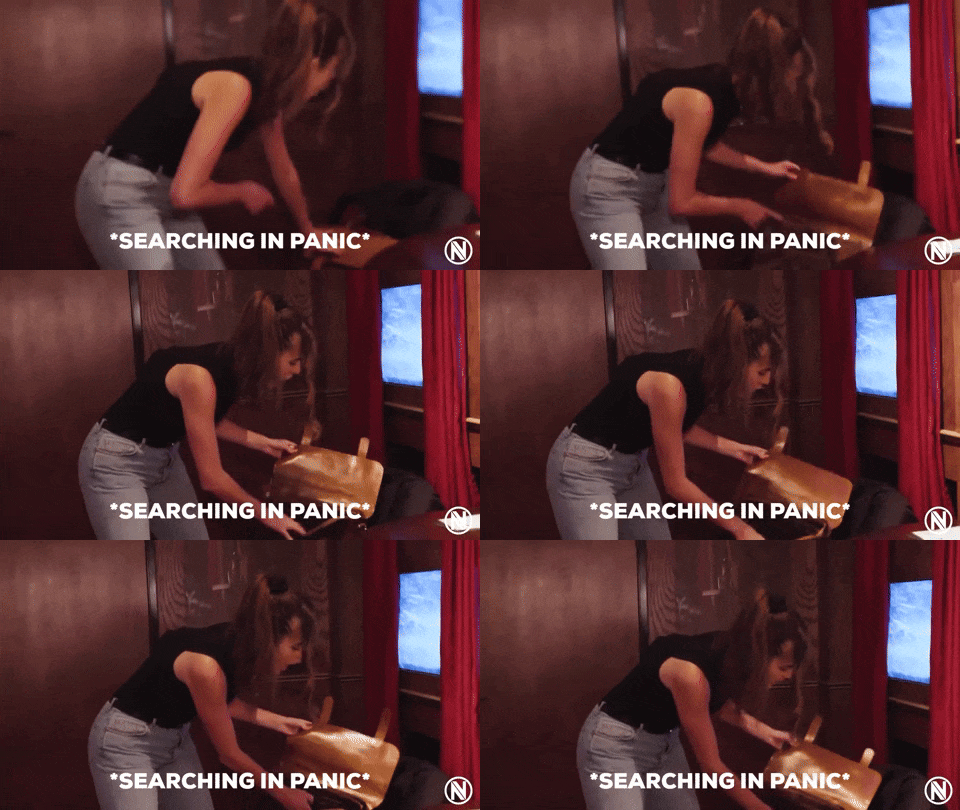
There’s something that really stresses me out about losing things. You flip covers and look through corners of your home, your eyes viciously roaming your surroundings and fear coursing through your veins as you worry the item may never be found again.

That blind panic when you think you’ve lost your phone or keys 😭

The title of this post is reminiscent of a book by writer Cecelia Ahern, which I remember reading as a child. Although I can’t recall much of the book’s plot line (sorry!), the idea conveyed in the title is intriguing. Could you imagine if there was a faraway place where lost things went? The one airpod that you gave up searching for many years ago, those pair of trousers you loved that magically went missing, and – of course – 101 pairs of odd socks. I often imagine that there is and picture my lost things laughing at me as I get all hot and bothered trying to find them. Not like that helps matters, of course.

The truth is, with lots of these little things I lose on a day to day life will indeed go on but my mind whispers irrational lies, telling me now the ‘order’ in my life has been disrupted and even if that disruption is minor, it will be felt. I’ll often go to sleep after losing something and as a result start dreaming about the item, that I recover it only to wake up to the reality that it is indeed lost.

A second truth is that this shows I probably value my material items way more than I should (I know, very unbiblical of me) but that’s a blog post for another day.

__

Have you ever lost any items important to you and how did you feel when you did? Did you find it/them again?

Thought of the Day: Believing in good days

Recently I’ve been thinking more about the ‘science’ (for lack of a better word) behind a bad day. Is purely it psychological, triggered by a series of external events or a perhaps mixture of both? Perhaps it works sometimes more like a self-fulfilling prophecy where if you think ‘oh boy, this day is gonna be bad’, it ends up being one?

My thinking down this ‘good day’ rabbit hole got me thinking about my previous post about being a morning person. Update from that post – I’m still not one so the struggle continues (I know, very sad.) However, I have started to realise the role mornings play in really helping set the tone for the day. The time to meditate, pray and do the occasional stretch (if I’m lucky) can really be a game-changer.

Of course, it may be possible to still start your morning right and have unfortunate series of events still warp your day into an unenjoyable one but there’s not much you can do about that.

When you’re lost in the heavy fogginess of a bad day it’s easy to mentally checkout and feel like you might as well as strap yourself for a day that is going downhill. At your lowest, you develop the opposite of rose-coloured glasses and start to feel mentally that your energy and patience levels are draining away. I would say planning little pockets of joy throughout a bad day is vital. These are just small things to look forward to and keep you going. Maybe it’s ensuring you listen to your favourite podcast or playlist as you work, saying a little prayer or texting a friend you know you can rely on for a dose of humour. Often when I’m stressed or feeling quite overwhelmed when I work, I’ll blast on some guilty pleasure tunes and let them fill the room. I know I can also always rely on a few close people to fill me with encouragement if I confide in them about the struggles I’m having that day. Sometimes it’s tough love but ultimately it’s good to get a different perspective since maybe the solution to turning your day around is easier than we think.

And for those reading this struggling with this week, wondering if good days are coming/ever returning, I promise you, they are. I can’t predict when but they’re coming so hold tight!

*Photo by Maria Oswalt on Unsplash